
Close search
 Published :
/
Published :
/ Posted by : Retech
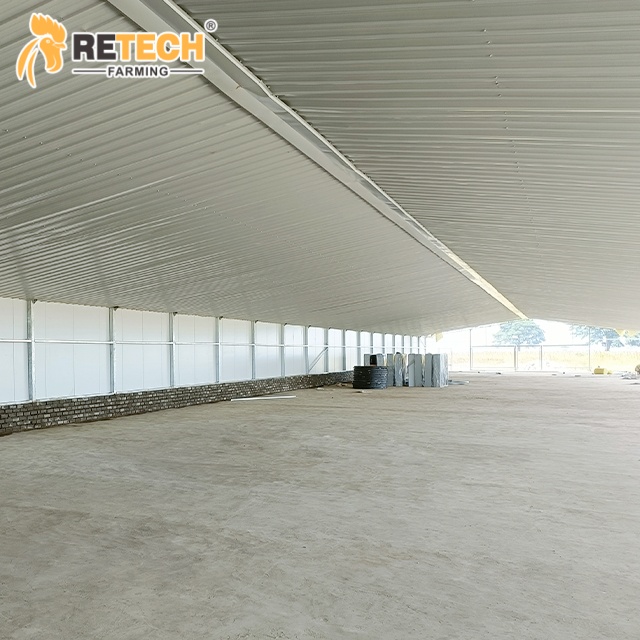
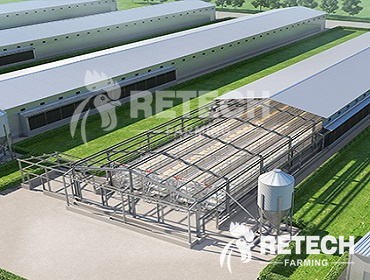
There are several types of broiler chicken houses:
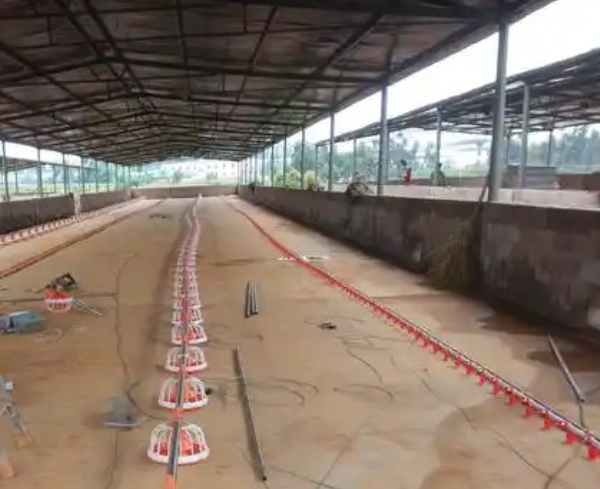
Relying on natural ventilation through the free flow of air. This type of chicken house is suitable for areas with warm climates, where there are no extreme high temperatures in the summer and low relative humidity. It is a common type of housing used in commercial broiler farms.
The upper half of the north and south walls of the chicken house consists of open windows, while the lower half is made of a brick-concrete structure. The roof is typically made of color steel plates, but it can also be a reinforced concrete structure with a waterproof covering. The roof may be ridged or arched, with equally spaced exhaust holes. These exhaust holes are square, measuring 1.2 meters by 1.2 meters, and are equipped with rotatable flaps to adjust airflow inside the house. The span of the chicken house is usually between 9 and 12 meters, with a height from the ground to the eaves ranging from 3 to 3.5 meters. Each room is 3 meters wide, and the length of the chicken house generally exceeds 50 meters.
Open chicken houses are mainly ventilated by natural ventilation and transverse ventilation. Due to the large span, several exhaust fans are usually installed on the north and south walls of the chicken house, and axial fans are installed at both ends of the house. The number of fans should be calculated in detail according to the number of chickens raised in the chicken house, so that natural ventilation and mechanical ventilation can be coordinated. Natural lighting and artificial supplementary lighting are used.
Advantages: relatively small investment, saving infrastructure investment and electricity expenses during breeding, relatively simple and easy construction;
Disadvantages: difficult to manage. Affected by changes in environmental conditions, it is difficult to prevent heatstroke and cool down, and it is difficult to prevent epidemics.
It is fully enclosed without windows, and the microclimate inside the chicken house is adjusted and controlled by artificial systems. This type of housing is suitable for broiler farms with strong financial resources, a high degree of mechanization, large scale, and robust technical expertise.
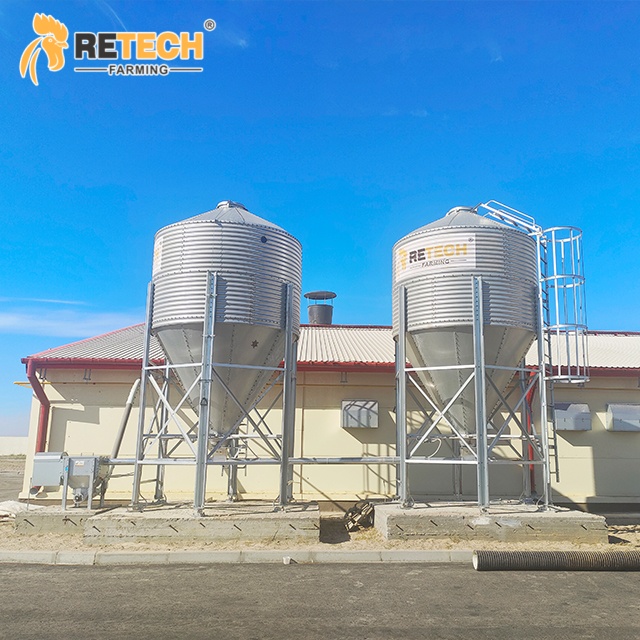
All structures are made of reinforced concrete, with color steel plate roofs and 37 cm thick walls, all plastered with cement. The span of the chicken house is typically between 9 and 12 meters, with a height from the ground to the eaves of 3 meters. If double-layer flat chickens are used, the height should be increased accordingly. The length of the chicken house generally exceeds 80 meters.
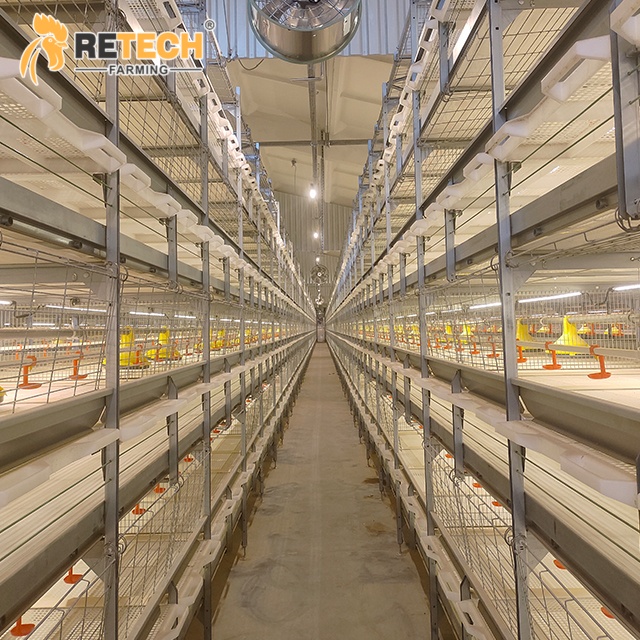
Advantages: easy to manage. The chicken house is isolated from the outside world, and the environment inside the house is stable, which can effectively prevent the invasion of pathogens, which is conducive to the health of chickens and the development of excellent growth characteristics;
The stocking density is high, which improves the utilization rate of the chicken house and improves production efficiency.
Disadvantages: large investment, high requirements for feeding management, and high requirements for power supply.
1.How to choose broiler breeding equipment?
2.Advantages of cage equipment
3.How much does it cost to raise 20,000 broilers?
RETECH has project design experience in more than 60 countries all over the world, focusing on automatic layer, broiler and pullet raising equipment manufacture, research and development. Contact us to get a broiler breeding project plan and quotation.
Website: www.retechfarming.com
Facebook: @retechfarmingchickencage 100k Followers
Whatsapp: +8618561818859
Email: info@retechfarming.com
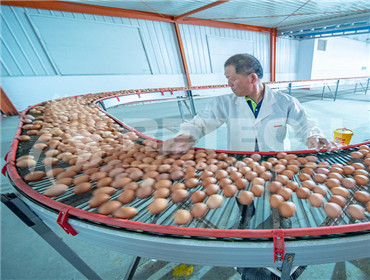
RETECH FARMING makes your chicken raising business much easier and more efficient,modern chicken cage improves your farming profits.

10 tips to ensure that your poultry farm runs smoothly and efficiently while always producing a quality product.
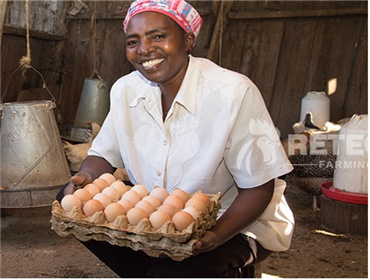
Modern poultry farms battery cage raising chicken in Kenya
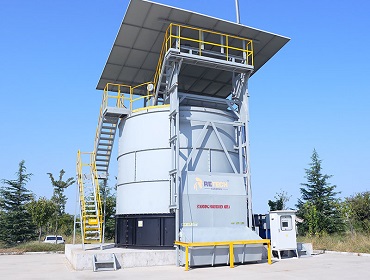
Sustainable treatment of manure in large-scale poultry farms in the Philippines: using vertical energy-saving fermentation tanks
How should we build a chicken house?A comfortable and stable chicken coop should consider these 7 factors.
Thinking of using a layer cage system in the Philippines? Learn about the different types, materials, capacity, and how to choose the right chicken farming equipment for your poultry farm. Get expert advice now!





 Back to press release


